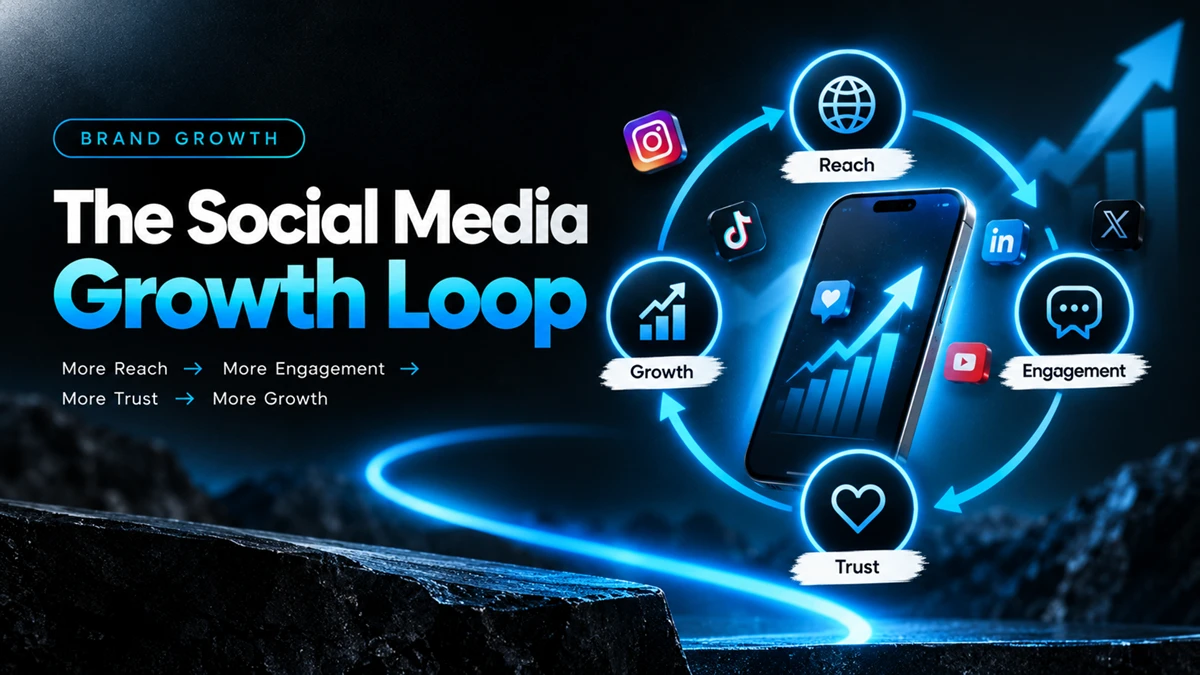
The Social Media Growth Loop
Each stage feeds the next — and growth circles right back into more reach.
1. Reach That Traditional Media Can't Match
Platforms like Instagram, Facebook, LinkedIn, and X carry hundreds of millions of active users, spanning every demographic, region, and interest group imaginable. A small business selling handmade goods can find customers three countries away just as easily as ones down the street.
Nearly a third of waking hours
The average user spends over two hours a day on social platforms — a window most brands still aren't fully using. Every scroll is a chance to be seen, remembered, or ignored.
2. Cost-Effective, With Full Control Over Spend
Compared to TV, radio, or print, social media marketing costs a fraction to run — and unlike those channels, you control exactly how much goes out the door.
Relative Entry Cost by Channel
Organic
Paid Ads
Radio
3. Real, Two-Way Customer Interaction
Traditional advertising broadcasts a message outward. Social media invites a conversation — comments, shares, DMs, and reactions mean the audience is responding to you in real time.
4. Consistent Brand Awareness
Every post, story, and video is a small deposit into your brand's memory bank. Consistent presence compounds — people start to trust a brand simply because it keeps showing up in a familiar way.
5. Precision Targeting for Ads
The real strength of social advertising is accuracy — brands can target by age, location, interests, and buying behavior, so spend goes toward people actually likely to convert.
A sportswear brand targeting fitness enthusiasts specifically sees dramatically better ROI than one running the same ad to a generic audience.
6. Real-Time Feedback and Insight
Social platforms give customers an open channel to react — instantly. A restaurant tracking reviews and comments can adjust its menu or service before small issues become bigger ones.
7. A Steady Driver of Website Traffic
Social media is a bridge, not just a destination. Linking blog posts, product pages, and offers turns followers into site visitors, and site visitors into customers.
8. Brand Personality That Builds Loyalty
Social media is where a brand stops being a logo and starts being a personality — tone, humor, values, and culture all come through here.
9. Influencer Partnerships for Instant Credibility
Partnering with the right influencer means borrowing trust that's already been built. A fashion brand working with a mid-size creator taps into an audience that already listens to their recommendations.
10. Measurable, Data-Driven Results
Every social campaign comes with a full paper trail — engagement, click-throughs, reach, and conversions are all trackable, so brands know what worked instead of guessing.
The 10 Growth Levers, At a Glance
Frequently Asked Questions
Is social media marketing still worth it for small, local businesses?
Yes — arguably more so. Precise geo-targeting means small businesses can reach nearby customers cost-effectively, without competing head-on with big national ad budgets.
Should a brand focus on organic content or paid ads first?
Organic content builds the foundation — voice, trust, and community. Paid ads work best once that foundation exists, amplifying what's already resonating.
How often should a brand post to see real results?
Consistency matters more than frequency. A predictable rhythm — even 3-4 times a week — outperforms sporadic bursts followed by silence.
At the end of the day, social media marketing isn't one tactic among many — it's the connective layer that makes reach, trust, feedback, and sales all work together. Which of these points is your brand leaning on the most right now? Let us know in the comments.

Discussion (0)
Leave a Reply
No comments yet. Be the first to start the discussion!